

The purpose of the closing entry is to reset temporary account balances to zero on the general ledger, the record-keeping system for a company’s financial data. After these entries, all temporary accounts (revenue, expenses, dividends) will have zero balances, and the net income and dividends will be reflected in the Retained Earnings account. Clear the balance of the expense accounts by debiting income summary and crediting the corresponding expenses.

What is Income Summary?
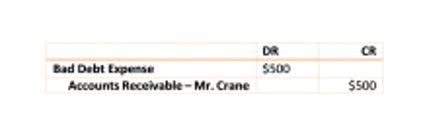
Permanent accounts, also known as real accounts, do not require closing entries. Examples are cash, accounts receivable, accounts payable, and retained earnings. These accounts carry their ending balances into the next accounting period and are not reset to zero. Once all the adjusting entries are made the temporary accounts reflect the correct entries for revenue, expenses, and dividends for the accounting year. We can also see that the debit equals credit; hence, Mental Health Billing it adheres to the accounting principle of double-entry accounting.
Close Dividends Account
- Income and expenses are closed to a temporary clearing account, usually Income Summary.
- Net income is the portion of gross income that’s left over after all expenses have been met.
- With the use of modern accounting software, this process often takes place automatically.
- This step ensures that the revenue is accurately transferred and the account is reset for the next period.
- Paper returns are accepted for the PA W-2, 1099-MISC, 1099-NEC, and 1099-R income statements and form REV-1667 Annual Withholding Reconciliation Statement.
Companies are required to close their books at the end of each fiscal year so that they can prepare their annual financial statements and tax returns. In this segment, we complete the final steps (steps 8 and 9) of the accounting cycle, the closing process. This is an optional step in the accounting cycle that you will learn about in future courses.

How Can Highradius Help Streamline Your Accounting Management?

If dividends amount to \$32,100, the entry would involve debiting retained earnings and crediting the dividends account by the same amount. This action removes the dividends from the books and reflects the decrease in retained earnings. Failing to make a closing entry, or avoiding the closing process altogether, can cause a misreporting of the current period’s retained earnings. It can also create errors and financial mistakes in both the current and upcoming financial reports, of the next gross vs net accounting period. Income summary effectively collects NI for the period and distributes the amount to be retained into retained earnings.
Chapter 4: The Accounting Cycle And Closing Process
- Closing entries are an important facet of keeping your business’s books and records in order.
- And without closing expense accounts, you couldn’t compare your business expenses from period to period.
- After this closing entry has been posted, each of these revenue accounts has a zero balance, whereas the Income Summary has a credit balance of $7,400.
- We need to do the closing entries to make them match and zero out the temporary accounts.
- There is no need to close temporary accounts to another temporary account (income summary account) in order to then close that again.
- In this case, we can see the snapshot of the opening trial balance below.
Temporary account balances can be shifted directly to the retained earnings account or an intermediate account known as the income summary account. Permanent accounts track activities that extend beyond the current accounting period. They’re housed on the balance sheet, a section of financial statements that gives investors an indication of a company’s value including its assets and liabilities.
Every year, thousands of New Zealand bank accounts are closed and the money is transferred to Inland Revenue. If your goal is to achieve smoother, faster, and more accurate closing entries, integrating an advanced tool with QuickBooks could be the next step. For instance, if your Sales Revenue account shows $100,000, that’s the amount you will close. I’ve helped businesses streamline their closing process for years, and I know exactly where things can get tricky.
Ultimate Guide to Closing Entries in Accounting with 3+ Examples

The total debit to income summary should match total expenses from the income statement. We see from the adjusted trial balance that our revenue accounts have a credit balance. To make them zero we want to decrease the balance or do the opposite.
Now that we have closed the temporary accounts, let’s review what the post-closing ledger (T-accounts) looks like for Printing Plus. This means that it is not an asset, liability, stockholders’ equity, revenue, or expense account. The account has a zero balance throughout the entire accounting period until the closing entries are prepared. Therefore, it will not appear on any trial balances, including the adjusted trial balance, closing entries and will not appear on any of the financial statements. To further clarify this concept, balances are closed to assure all revenues and expenses are recorded in the proper period and then start over the following period.