

This might happen if you adjust or reverse the expenses you previously recorded. For example, For example, let’s say you were charged for a service you didn’t end up using, and the vendor issued a refund. You would credit the expense account for that service to reflect the refunded amount. Credits boost your revenue accounts since they represent income your business has earned. For example, when a customer makes a purchase, you credit your revenue account, which increases your total income. The owner’s equity and shareholders’ equity accounts are the common interest in your business, represented by common stock, additional paid-in capital, and retained earnings.
- Furthermore, inaccurately recording transactions by using incorrect amounts or entering them under the wrong account can also lead to errors.
- Understanding debit vs credit is essential in grasping the concept of double entry accounting.
- The owner’s equity and shareholders’ equity accounts are the common interest in your business, represented by common stock, additional paid-in capital, and retained earnings.
- They help you keep track of adjusting entries and see how they affect your income statement.
- (Purchases of equipment or supplies are not recorded in the purchases account.) This account reports the gross amount of purchases of merchandise.
- A gain is measured by the proceeds from the sale minus the amount shown on the company’s books.
Advantages and Disadvantages of T Accounts
Create separate T-accounts for different income sources like wages, interest, or business income. While T-accounts provide a structured framework for recording transactions, they offer limited flexibility in reporting formats. Businesses often require customized reports tailored to specific stakeholder needs, regulatory requirements, or industry standards.

What is the purpose of T accounts?
In essence, for every transaction, the total debits must equal the total credits. This section will delve into various scenarios where debits and credits come into play, providing a clearer picture of how these entries work in different contexts. From the perspective of a business owner, an accountant, and an auditor, we will explore how these entries affect financial statements and the overall financial health of a business. Understanding the Golden Rules of Accounting is essential for anyone looking to grasp the fundamental concepts that govern the world of debits and credits. These rules form the bedrock of accounting practices and are crucial in the accurate recording and classification of financial transactions.
Examples of T Accounts for Better Learning
- When they credit your account, they’re increasing their liability.
- By understanding and applying accounting principles, you can ensure that your records are accurate and reliable.
- From misinterpreting the debit and credit rules to neglecting the importance of a trial balance, these mistakes can compromise the integrity of financial data.
- Investigating the validity of the accounting equation theory can provide a deeper understanding of how financial statements are interconnected.
- While a general ledger provides a summary of all transactions, a subsidiary ledger offers more specific information about individual accounts such as customers or suppliers.
T-Accounts are the visual representation of transactions in accounting, showing the debits on the left and credits on the right. They are a fundamental tool for understanding the mechanics of double-entry bookkeeping. As we delve into advanced T-Account examples, we’ll explore complex transactions that go beyond the basics, illustrating how multiple accounts are impacted by a single financial event. These examples will provide a deeper insight into the intricacies of accounting practices and demonstrate the balancing act that is at the core of financial record-keeping.
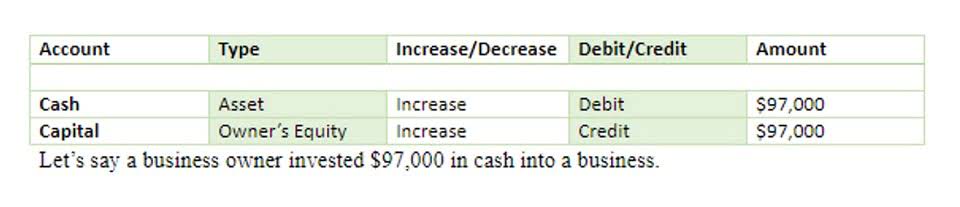
Conversely, debit entries increase the account for expense accounts, and credit entries decrease it. Debits and credits are recorded on opposite sides of the T-account. Debits increase assets, expenses, and dividends, while credits increase liabilities, equity, and revenues. The T-account helps accountants keep track of these increases and decreases, ensuring that the accounting equation remains balanced. When dealing with T-accounts, it’s crucial to approach them with a clear understanding of their structure and purpose in accounting.

This ties closely to corporate accounting and financial structuring. Different types of accounting variables are treated differently in T accounts. Some variables’ values increase on the debit side, while some are on the credit side. So, thoroughly go through this https://livesinema.com/friedman-kannenberg-music-industry-accountants/ section to understand the treatment of different variables in the ledger accounts.

Talk to bookkeeping experts for tailored advice and services that fit your small business. Debits decrease your equity, usually when you pay out dividends, experience losses, or withdraw funds from the business. Now let’s take a look at the pros and cons of T accounts to get a better grasp on the T accounts. Even professionals tend to get confused when talking about T accounts. Therefore, they also need to truly comprehend what is a T account. For those considering diving into t account credit debit accounting for startups, having clarity on such fundamentals is essential.

What are T Accounts? – Comprehensive Guide – Recommended Readings
Interest Revenues are nonoperating revenues or income for companies not in the business of lending money. For companies in the business of lending money, Interest Revenues are reported in the operating section of the unearned revenue multiple-step income statement. That part of the accounting system which contains the balance sheet and income statement accounts used for recording transactions. Expenses normally have debit balances that are increased with a debit entry.